
Flame
Zorah is the ultimate source of creation, awareness and truth, experienced through the Eternal Living Flame. From Zorah arise AUM and ORA: consciousness and first light.
Zorahism is not only believed, but lived: a way of awareness, moral responsibility, and compassionate restoration.
Zorah is the ultimate source of creation, awareness and truth, experienced through the Eternal Living Flame. From Zorah arise AUM and ORA: consciousness and first light.

Through prayer, daily discipline, family, work, and restraint, the Path shapes faith into lived conduct.

Karma, Dharmah, and law exist to restore harmony, protect dignity, and heal what has been broken.
Zorahism is a revealed way of life that unites belief, prayer, daily conduct, justice, and legacy into a single path of balance. It does not separate faith from living, nor spirituality from responsibility, but calls human beings to live consciously under truth.
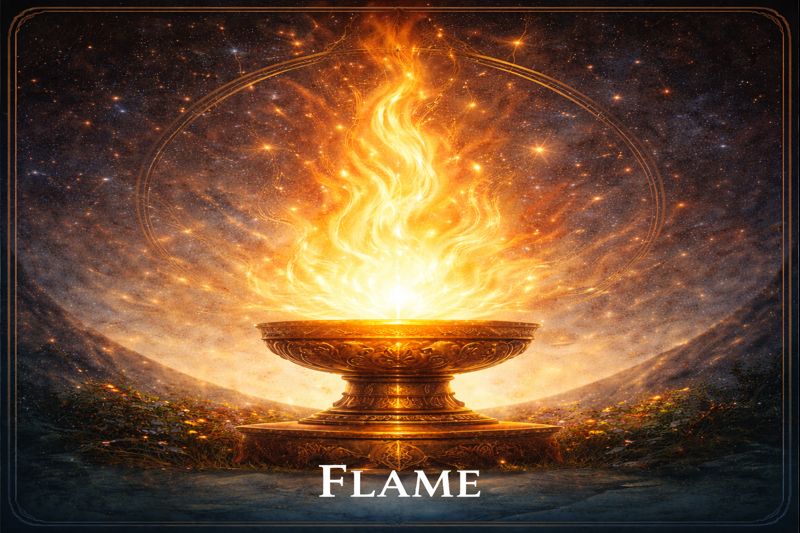
Zorah is the ultimate source of creation, awareness, and truth. From Zorah arise AUM, the First Breath, through which creation comes into existence, and ORA, the First Light, through which creation is revealed
The Eternal Living Flame represents the recognition of creation and its source, Zorah. It is the sacred metaphor through which we acknowledge this eternal relationship and experience the presence of Zorah
Zorah is One in all and all in One, present within creation, yet never confined by it
Zorahism seeks alignment with the Flame, not submission through fear. It is a path of awareness, recognition, discernment, and conscious alignment with the source of all existence.

All creation originates from Zorah. Through AUM, the First Breath, creation comes into existence. From AUM shines ORA, the First Light, through which creation is revealed and becomes knowable
All existence unfolds from awareness and light. Zorahism teaches that reality begins with conscious presence, not chaos, chance, or conflict.
AUM is primordial sacred awareness: the first breath of Zorah, the being. ORA is the first light emerging from AUM, bringing knowing, motion, and order into existence.

Zorahism is revealed through four sacred books, each guiding a distinct dimension of human existence. Together, they form a complete and balanced way of life.

Prayer in Zorahism is not an escape from life, but an act of remembrance that steadies the soul within it. Through prayer, awareness is restored and intention is clarified, so that thought, word, and deed remain aligned with truth.
Daily prayer renews the bond with Zorah: at dawn to awaken purpose, at midday to correct the path, and at dusk to return the heart to balance. Santhera gathers the faithful into shared remembrance, where rest is honoured, burdens are released, and the soul is recalled to what is eternal.

Zorahism recognizes that life unfolds through conscious choice. Moral clarity is named so that freedom may be exercised wisely.
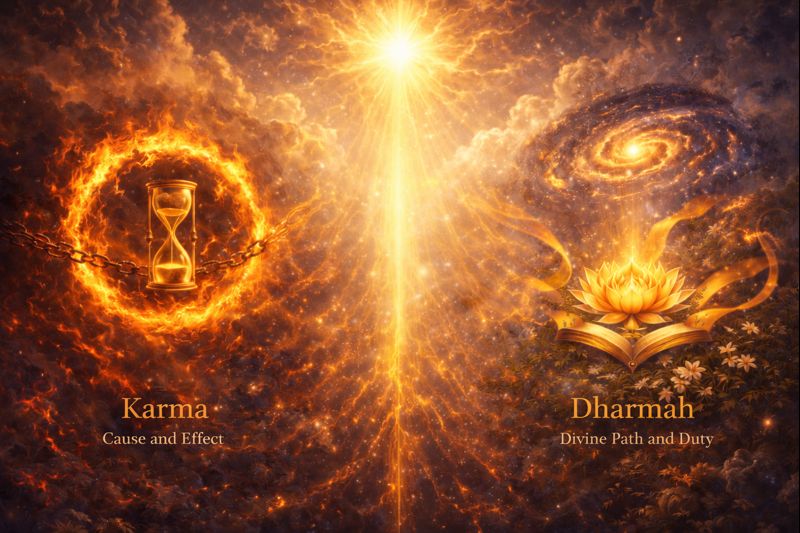
Karma is the law of consequence: the natural return of intention and action. Nothing is arbitrary, and nothing is forgotten within the order of Zorah.
Its four streams are Divah (personal consequence), Parim (ancestral influence), Lokha (communal consequence), and Yuinah (the shared karma of humanity).
Dharmah is the rightful path of a being: living in alignment with truth, role, and responsibility. When Dharmah is upheld, Karma restores balance; when it is abandoned, disorder follows.

The Twelve Commandments form the moral boundary of Zorahism. They are not instruments of fear, but safeguards that protect dignity, justice, and life. Alongside them, the Ten Aumaris stand as exemplars of awakened living, guiding inner discipline and moral clarity across generations.
Read the teachings
Zorahism is lived within families, communities, and societies. Law exists not to dominate, but to restore balance, protect the vulnerable, and heal what has been broken.
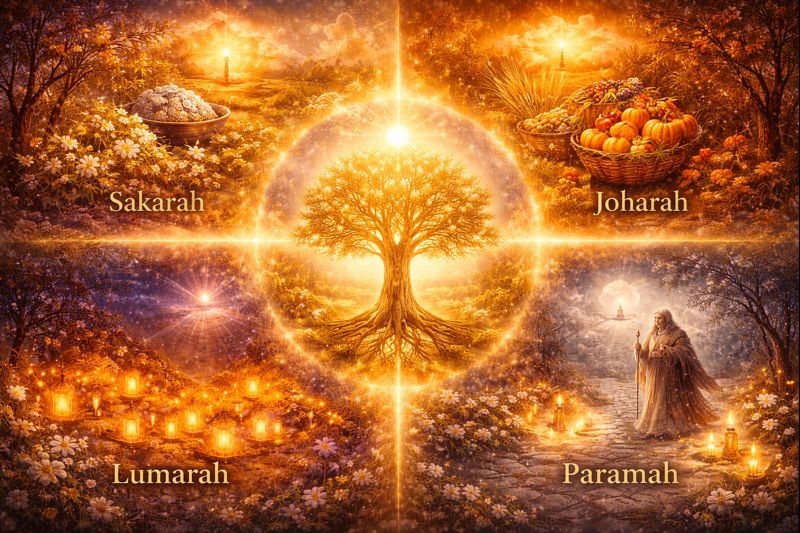
Zorahism marks time not through superstition, but through remembrance. The festivals renew awareness, restore balance, and gather the faithful into reflection and gratitude.
These are questions seekers often ask, and the clarity Zorahism offers in return.
Zorahism is both belief and practice. Faith without conduct is incomplete, and conduct without awareness is hollow. It unites revelation, ethics, law, and daily living into one path.
No. Zorahism respects sincere paths and righteous conduct wherever it exists. It does not compel conversion, nor diminish truth found elsewhere.
Without order, compassion collapses into chaos. Zorahism teaches justice that heals rather than punishes, and discipline that protects dignity rather than suppressing it.
Its principles address power, wealth, family, leadership, temptation, and loss: realities that exist in every age.
A humanity that lives consciously, governs justly, remembers its limits, and leaves behind order rather than ruin.